
Is SEO Dead? Why AEO Is Replacing Traditional Search Optimisation
SEO isn't dead. But the version of SEO that most agencies are still selling? That one is on borrowed time. The way customers find businesses is changing fast, and the businesses that notice first are the ones pulling ahead.
What traditional SEO was built for
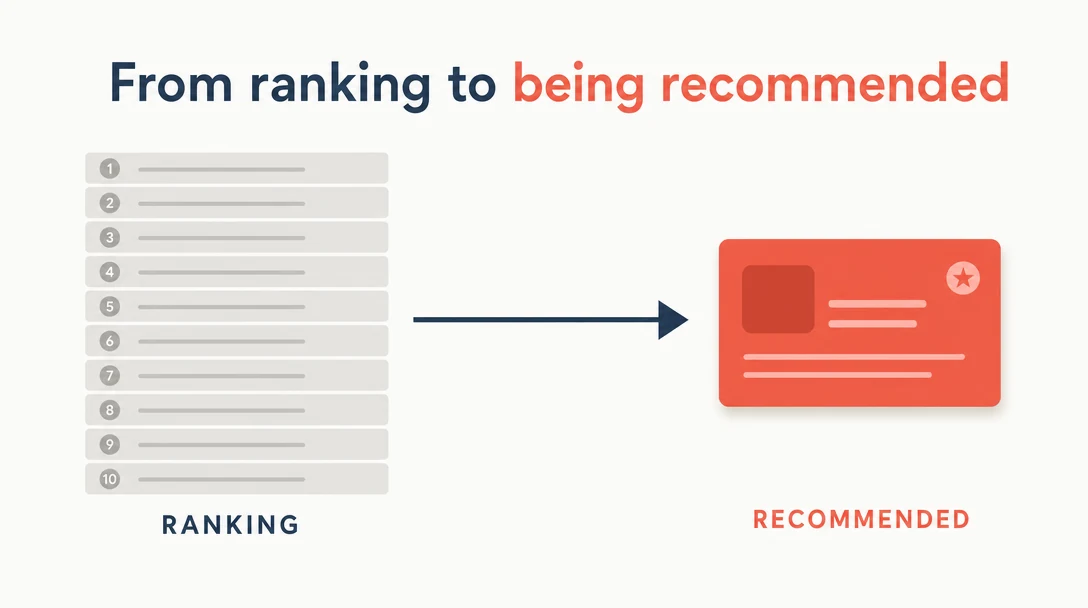
For two decades, SEO meant one thing: rank higher in Google's blue links. Target the right keywords. Build backlinks. Keep your site technically clean. It worked because Google's blue links were how people found things. That assumption is no longer reliable. Google now generates AI-powered answers for a huge percentage of searches before users ever see an organic result. Many searches return zero clicks because the answer appears directly on the page. Users who do click are increasingly doing so through AI summaries, not the traditional list of ten links.
Enter AEO: Answer Engine Optimisation
AEO is the practice of making your business visible to AI answer engines, not just Google's traditional index. Instead of optimising for keyword rankings, you're optimising for citation: getting AI systems to name your business as a specific, trusted recommendation. The core difference is intent. A searcher using Google might scroll through several results. A person asking ChatGPT 'recommend a good accountant in Parramatta' wants one answer. The businesses that appear in that answer are capturing a customer. The ones that don't might as well not exist for that query.
What changes, what stays the same
Good news: much of solid SEO practice translates directly to AEO. A fast, technically sound website helps both. Quality, specific content matters more than ever. A complete and accurate Google Business Profile matters for both. What's different is the layer on top. AEO requires structured data markup (schema) that formally describes your business to AI systems. It requires FAQ content written as direct answers to the questions customers actually ask. And it requires entity clarity: your website needs to describe what you do, where you operate, and who you are with enough consistency that an AI can confidently summarise it.
The window is open now
Most Australian small businesses haven't started thinking about AEO. Most agencies aren't across it yet either. That means the businesses that act in the next six to twelve months will establish a visible advantage before the market catches up. AI search is not a future trend to add to the planning calendar. It is already sending customers to specific businesses every day. The question is whether your business is one of them.
Traditional SEO is not something to abandon. But it's not enough on its own anymore. Adding AEO to your strategy now means your business stays visible as the search landscape continues to shift. Start with a free AI visibility audit to see where you currently stand.
Ready to improve your AI visibility?
Get a free audit and see exactly where your business appears - and where it doesn't.